Your team’s nervous system takes cues from yours.
When you’re calm, they think clearly. When you’re stressed, they’re stressed.
Leaders sit at the emotional centre of their organisations — people feed off their energy. Their emotions influence team behaviour, performance, and wellbeing (Knippenberg & van Kleef, 2016; Straw et al., 2015).
Research shows that leaders’ positive moods can strengthen psychological safety and improve collaboration (Liu et al., 2017; Wang et al., 2024). Because leaders set the tone, when they lack emotional regulation and self-awareness, engagement drops and turnover often rises.
When Leaders Let Their Emotions Take the Lead
Even the most capable leaders can find themselves reacting instead of responding under pressure. Without strong self-management, it becomes harder to stay composed and lead with clarity.
Common patterns include:
- Reacting instead of responding – speaking or acting in the heat of the moment, without considering the longer-term impact on the team.
- Changing direction frequently – making emotion-driven decisions that shift with mood, leaving the team uncertain about priorities.
- Cancelling or withdrawing – struggling to show up consistently, cancelling meetings or avoiding engagement when overwhelmed.
- Making promises they can’t keep – overcommitting in moments of enthusiasm, then retreating when challenges arise.
- Panicking under pressure – when the leader panics, the team’s anxiety spikes too.
The Impact of Unmanaged Emotions on Teams
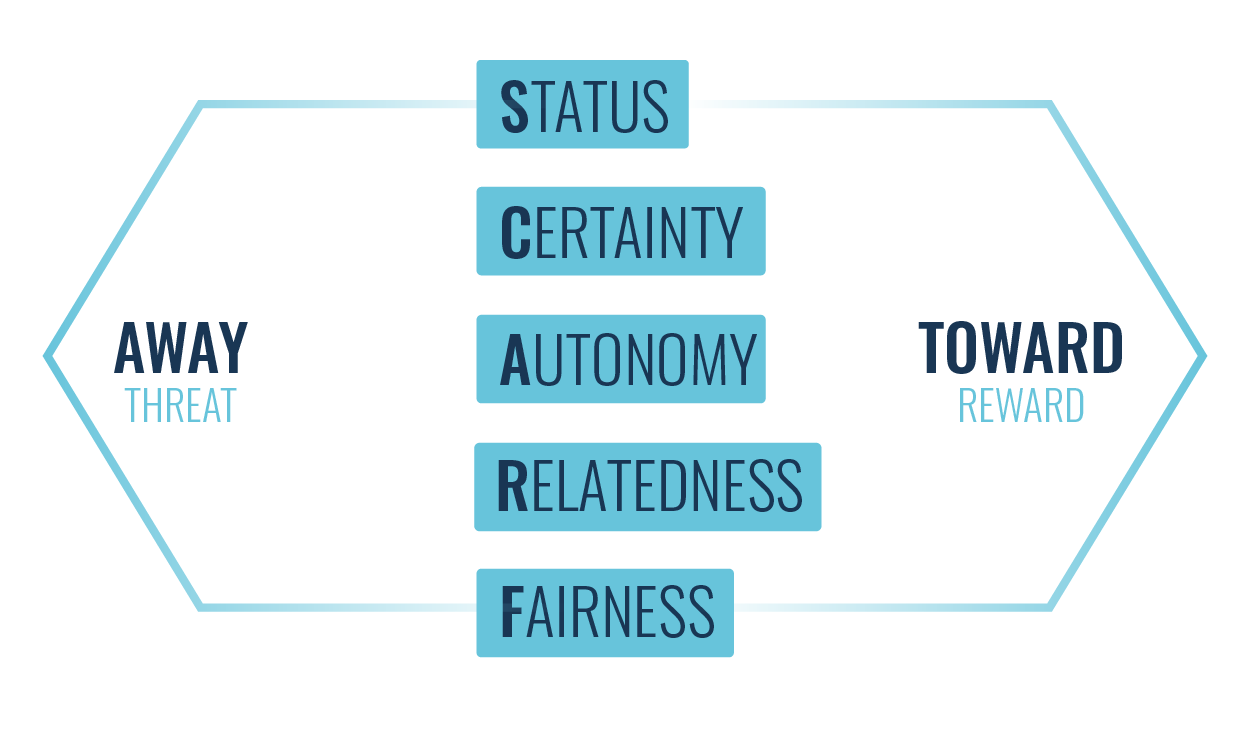
When leaders react impulsively, it creates confusion and uncertainty. The brain perceives this as a threat, triggering the fight–flight–freeze response. In this state, the brain focuses on survival, not creativity or problem-solving.
Over time, this creates an unsafe, unstable environment where:
- Creativity declines — people play it safe instead of sharing ideas.
- Engagement drops — participation and motivation wane.
- Morale suffers — unpredictability drains energy and confidence.
- Burnout risk rises — uncertainty consumes mental resources and creates chronic stress.
When people fear how their leader might react, they stop asking questions, offering ideas, or raising concerns. Silence replaces communication and innovation stalls.
The Importance of a Grounded, Regulated Leader
The difference between a reactive and a regulated leader can transform a team’s emotional climate.
When leaders are consistent and predictable, their teams feel safe. The brain craves certainty — it likes to know what’s coming next. When employees can rely on their leader to respond calmly and clearly, they can focus their energy on work, rather than self-protection.
Grounded leaders don’t just stabilise performance — they regulate their team’s emotions by modelling composure and empathy. Over time, this builds resilience and psychological safety across the organisation (Park et al., 2024).
Emotional Regulation Techniques for Leaders
Even with strong self-awareness, managing emotions takes practice. With training, any leader can move from reaction to response.
1. Pay attention to your emotions
Notice strong emotional responses and reflect on what triggered them. This builds awareness and empathy for others’ perspectives.
2. Pause and breathe
A ten-second pause allows the brain to switch from reacting to responding.
3. Step away briefly
Take a short walk or a moment of space to reset your nervous system and regain perspective.
4. Use 7/11 breathing
Breathe in for 7 seconds, out for 11. This calms the body and re-engages rational thinking.
5. Journal regularly
Reflect on how your emotions influenced your decisions and interactions. Over time, you’ll identify helpful and unhelpful patterns.
6. Invest in coaching or training
Deepen your understanding of your triggers and learn tools to stay grounded under pressure.
Strengthen Your Leadership From the Inside Out
At NeuroEdge Growth, we help leaders build the emotional regulation, awareness, and neuroscience-based tools to lead with calm, confidence, and clarity.
Our Staying Grounded Under Pressure module is designed to help you understand your emotional triggers, manage stress, and model the behaviours that create psychological safety and performance in your team.