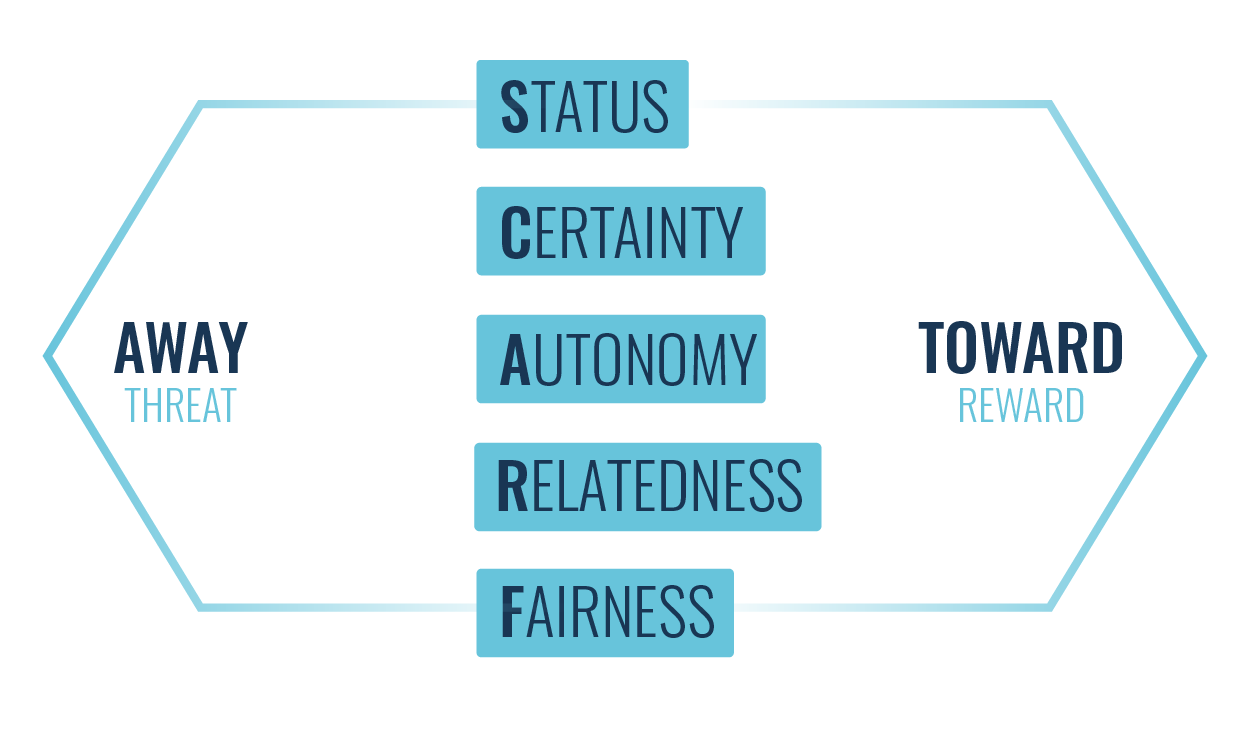
Uncertainty Feels Like a Threat—for a Reason
Uncertainty is everywhere—especially in leadership. Whether it’s market changes, role ambiguity, or team dynamics, not knowing what’s next can feel deeply unsettling.
That’s not weakness. That’s your brain doing its job.
Why Uncertainty Triggers the Threat Response
The brain’s number one job is to keep you safe. It scans constantly for danger—and it interprets uncertainty as a lack of control and predictability, which can activate the amygdala and threat response.
This can result in:
- Overthinking and paralysis
- Heightened anxiety or reactivity
- Seeking control through micromanagement
- Avoidance or procrastination
3 Brain-Based Strategies for Leading Through Uncertainty
1. Name It to Tame It
When we label uncertainty or discomfort, we activate the prefrontal cortex—reducing emotional overload and increasing clarity.
2. Create Micro-Certainty
Offer your brain something stable: routines, rituals, or simple action steps. This builds a sense of control in chaos.
3. Practice Mental Flexibility
Use reframing techniques to shift from “what if this fails?” to “what might I learn?”
Curiosity soothes the fear response and re-engages creativity.
Final Thoughts: Uncertainty is Inevitable—Panic Isn‘t
Your brain will always react to uncertainty—but it doesn’t have to run the show. When you lead with awareness of how uncertainty impacts the nervous system, you can stay grounded and help others do the same.
Interested in resilience coaching or team training? Book a discovery call with NeuroEdge Growth.